National-technological republic
Israel
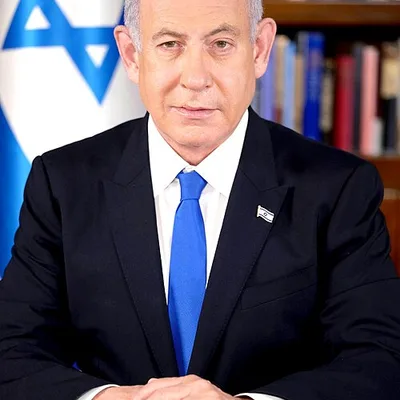
A parliamentary republic in the Middle East, Israel combines a vibrant democracy, a strong Jewish national identity, an advanced technology economy, and a prolonged conflict with the Palestinians that dominates its politics and security.

Current country
This profile represents the catalog’s interpretation of a political system, rather than the opinions of all its residents.
Compare your own views01 / The profile
Twelve axes, one perspective
02 / What stands out
Three distinctive positions
34.8pt
Diplomacy
80% Militarist, compared with the ideology catalog’s 45.25% median.
When is armed force an appropriate political instrument?
30.5pt
Control
32% Planning, compared with the ideology catalog’s 62.5% median.
How should economic activity be coordinated?
29.2pt
Religion
29% Irreligious, compared with the ideology catalog’s 58.2% median.
What place should religion have in individual and public life?
The profile in detail
Government and accountability. Structure: 26.2% Federal, 73.8% Unitary (Strong Unitary); Representation: 65% Democracy, 35% Autocracy (Leaning Democracy). This combination separates where authority is located from how leaders are selected and constrained. It preserves those two choices even when a broad political label does not distinguish them. On Representation, the 877-profile catalog median is 57.5% Democracy; Israel sits 7.5 points above it. 124 reference profiles share this band.
Civil power and culture. Power: 66% Security, 34% Liberty (Leaning Security); Immigration: 63.7% Assimilation, 36.3% Multiculturalism (Leaning Assimilation). The first contrast concerns limits on civil life; the second concerns cultural adaptation and plural identities. Reading them together avoids inferring an immigration position solely from a preference about security. On Power, the 877-profile catalog median is 58.8% Security; Israel sits 7.2 points above it. 175 reference profiles share this band.
Force and foreign policy. Diplomacy: 80% Militarist, 20% Pacifist (Strong Militarist); Intervention: 28.7% Non-interventionist, 71.3% Nationalist (Leaning Nationalist). Military capacity and projection of national interests are distinct choices in this model. These coordinates show how the profile combines military means and external objectives, without assuming that they always move together. On Intervention, the 877-profile catalog median is 48.8% Non-interventionist; Israel sits 20.1 points below it. 187 reference profiles share this band.
Ownership, coordination and trade. Economy: 30% Public, 70% Private (Leaning Private); Control: 32% Planning, 68% Free market (Leaning Free market); Trade: 41% Protectionism, 59% Globalism (Leaning Globalism). These ask three different questions: who owns, how activity is coordinated and how the economy engages abroad. The economic profile of Israel depends on that combination, rather than a single left or right classification. On Economy, the 877-profile catalog median is 53.2% Public; Israel sits 23.2 points below it. 179 reference profiles share this band.
Belief and social norms. Religion: 29% Irreligious, 71% Religious (Leaning Religious); Morality: 38% Progressive, 62% Traditionalist (Leaning Traditionalist). The model keeps religious influence separate from continuity in social norms. These values describe the reference profile; they do not assign a religion to someone who receives this match in the quiz. On Morality, the 877-profile catalog median is 38.8% Progressive; Israel sits 0.8 points below it. 197 reference profiles share this band.
Technology and limits. Technology: 71.2% Technology, 28.8% Biology (Leaning Technology). This adds a perspective on innovation and biological continuity that cannot be inferred directly from the economic coordinates. For Israel, the 21.2-point distance from the center indicates the intensity of this particular position. On Technology, the 877-profile catalog median is 57.5% Technology; Israel sits 13.7 points above it. 299 reference profiles share this band.
03 / Connections
Nearby profiles
Republican Rome
95.9% compatibility
Ukraine
94% compatibility

Renaissance Florence
93.6% compatibility

Poland
93.3% compatibility

Georgia
91.6% compatibility

El Salvador
91.5% compatibility
At the other end of the catalog
Closest ideologies
Closest political figures
Explore the same region
Georgia
91.6% compatibility
South Korea
89.9% compatibility

Armenia
89.8% compatibility

Pakistan
88.8% compatibility

Philippines
87.9% compatibility
Syria
87.7% compatibility
Got Israel on the 12 Axes test?
Look at the other nearby profiles and the axes where you differ. A match is a starting point for exploring ideas, rather than a final identity.
Understand your result ↗Frequently asked questions
What does getting Israel on the test mean?
Your twelve scores are relatively close to this reference profile. A match describes similarity inside the model; it does not imply agreement with every action, policy or belief associated with Israel.
Which ideology is closest to Israel?
Neoconservatism has 97.7% compatibility in the catalog. This score combines axis proximity, overall direction, intensity and the largest difference between the profiles.
Which axis stands out for Israel?
Diplomacy is among the furthest from the center: 80% Militarist and 20% Pacifist. Read all twelve axes to understand the full combination.
Your perspective, in detail
Where do your ideas stand?
Explore twelve dimensions and discover the combinations that make your perspective your own.